

Introduction
If your cat lives exclusively indoors, it's easy to assume they're safe from fleas. Unfortunately, that's a common misconception. While outdoor cats are generally at greater risk, indoor cats aren't immune. Fleas are expert hitchhikers that can enter your home on clothing, shoes, shopping bags, delivered parcels, or even other pets. Once inside, they can quickly establish themselves and begin reproducing.
The good news is that flea infestations are both treatable and preventable, which is why understanding how fleas get indoors is the first step towards protecting both your cat and your home.
What Are Fleas?
Fleas are tiny, wingless parasites that survive by feeding on the blood of animals. The most common species affecting cats is the cat flea (Ctenocephalides felis), which is also the predominant flea species found on cats in Malaysia.¹
Although they measure only 1 to 3 millimetres in length, fleas are remarkable jumpers. They can leap 50 to 200 times their body length,3 making it easy for them to leap onto cats, dogs, wildlife and even humans. Once on a host, they begin feeding on blood, and female fleas can start laying eggs shortly afterwards, allowing infestations to spread rapidly.
Like all insects, fleas go through four life stages²:
Egg – After feeding on your cat's blood, an adult female flea lays batches of tiny white eggs that fall off into the environment. Depending on the temperature and humidity, these eggs usually hatch within 1 to 10 days.²
Larva – Flea larvae are tiny, worm-like creatures that avoid light by hiding deep inside carpets, cracks and other sheltered areas. Here, they feed on organic debris and flea dirt (the digested blood excreted by adult fleas).² This stage lasts about 5 to 20 days, after which they spin a sticky silk cocoon.
Pupa – Inside the cocoon, the larva develops into a pupa before emerging as an adult flea. This is the toughest stage of the flea life cycle because the cocoon protects the developing flea from environmental conditions and many insecticides. Flea pupae can remain dormant for weeks or even months until they detect warmth, vibrations or carbon dioxide, signalling that a host is nearby.²
Adult – Once they emerge, adult fleas quickly jump onto a host to feed. Female fleas can begin laying eggs within 24 to 48 hours, restarting the entire life cycle.²
Can Indoor Cats Still Get Fleas?
Yes. Keeping your cat indoors reduces its exposure to fleas by limiting contact with stray animals, wildlife and heavily infested environments. However, it doesn't eliminate the risk entirely.
Fleas can enter even the cleanest homes in several ways, including:4
• On your clothing, shoes or shopping bags after spending time outdoors.
• Through friends or family visiting with pets that unknowingly carry fleas.
• Via other household pets that spend time outdoors before bringing fleas inside.
• On newly adopted cats or kittens that may already be carrying fleas.
Once fleas enter your home, indoor environments provide ideal conditions for them to survive and multiply due to common hiding places including:4
•Carpets and soft furnishings, which provide warmth, shelter and food for flea larvae.
•Pet bedding, where newly emerged fleas can easily find their next blood meal.
•Dark corners, floor crevices and gaps where flea larvae can develop unnoticed.
What Happens If Fleas Infest Your Cat?
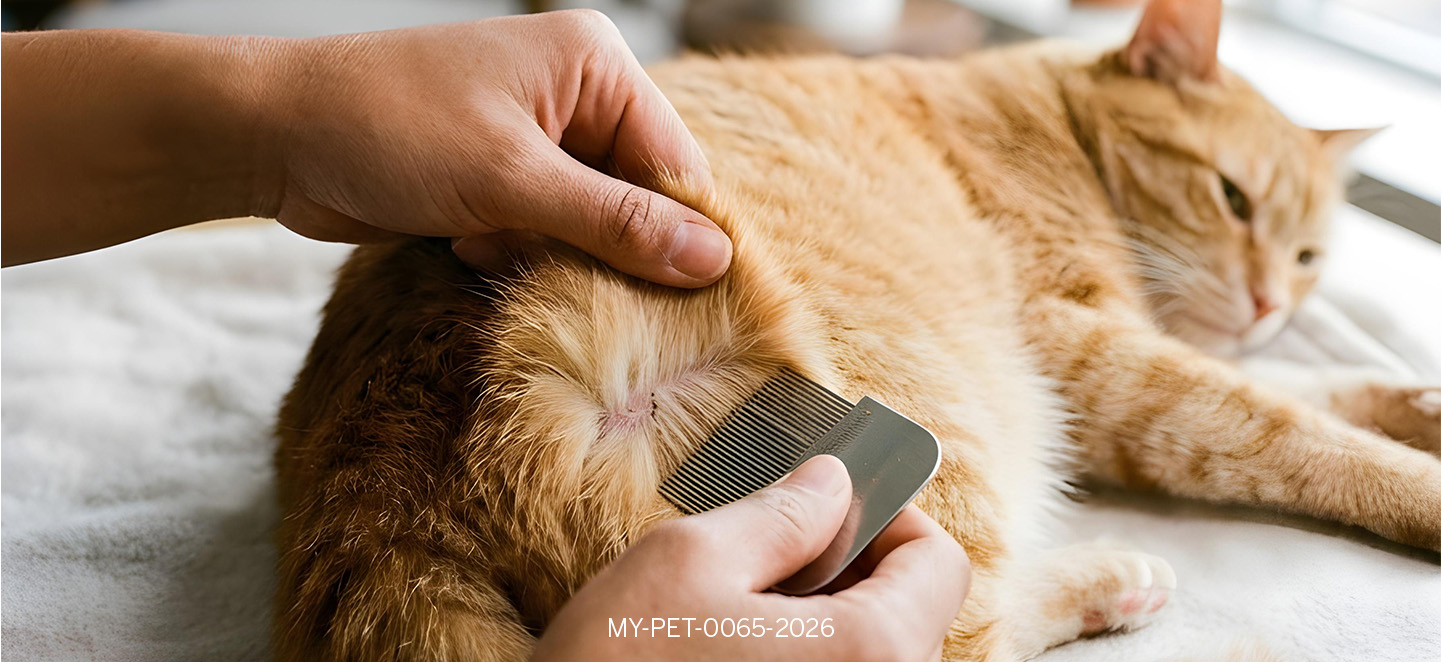
The signs of a flea infestation can vary, but common symptoms include:
• Frequent scratching or biting at the skin.
• Excessive grooming or licking.
• Hair loss or bald patches.
• Red, irritated or inflamed skin.
• Small black specks in the coat (known as flea dirt), which resemble tiny grains of black pepper.
Unfortunately, flea infestations can lead to more serious health problems if left untreated. Heavy flea infestations may cause life-threatening anaemia, particularly in kittens, due to blood loss. Some cats also develop flea allergy dermatitis (FAD),3 an allergic reaction to flea saliva that causes intense itching. Constant scratching can damage the skin, increasing the risk of secondary bacterial skin infections.
Although fleas cannot live permanently on humans because our skin isn't a suitable environment, they will readily bite people if a flea infestation becomes established in your home.
How to Protect Your Indoor Cat All Year Round
If fleas become established in your home, eliminating them can be time-consuming and frustrating. It often requires repeated vacuuming, thorough cleaning and environmental treatments to remove fleas at every stage of their life cycle.
That's why prevention is far easier than treatment. Even if your cat never goes outdoors, year-round flea prevention should be part of their regular healthcare routine.
For next-level parasite protection, ask your veterinarian about NexGard® COMBO, the most complete parasite protection for cats. This easy-to-apply monthly spot-on contains esafoxolaner, which rapidly kills adult fleas by overstimulating their nervous system after they feed, helping to break the flea life cycle. It also provides month-long protection against multiple common external and internal parasites.
Want to know whether your cat may be at risk of fleas? Try the FREE Parassess® Tool. Simply answer a few questions about your cat's lifestyle and environment to receive a personalised parasite risk report. You can then share the report with your veterinarian, who can recommend the most appropriate parasite protection based on your cat's individual needs, helping keep them healthy all year round.
References:
1. https://www.ecdc.europa.eu/en/infectious-disease-topics/related-public-health-topics/disease-vectors/facts/fleas-siphonaptera
2. https://www.researchgate.net/publication/349464360_Risk_factors_associated_with_flea_infestation_on_cats
3. https://www.merckvetmanual.com/integumentary-system/fleas-and-flea-allergy-dermatitis/fleas-in-dogs-and-cats?utm_source=chatgpt.com#Transmission-and-Epidemiology_v3278663
4. https://pubmed.ncbi.nlm.nih.gov/9017899/
5. https://pmc.ncbi.nlm.nih.gov/articles/PMC12733989/
6. https://www.petmd.com/cat/general-health/what-do-fleas-look-cats